What a $0-to-First-100-Customers Sales Stack Actually Looks Like in 2026
Every founder asks the same question in month one: what tools do I actually need to get my first 100 customers?
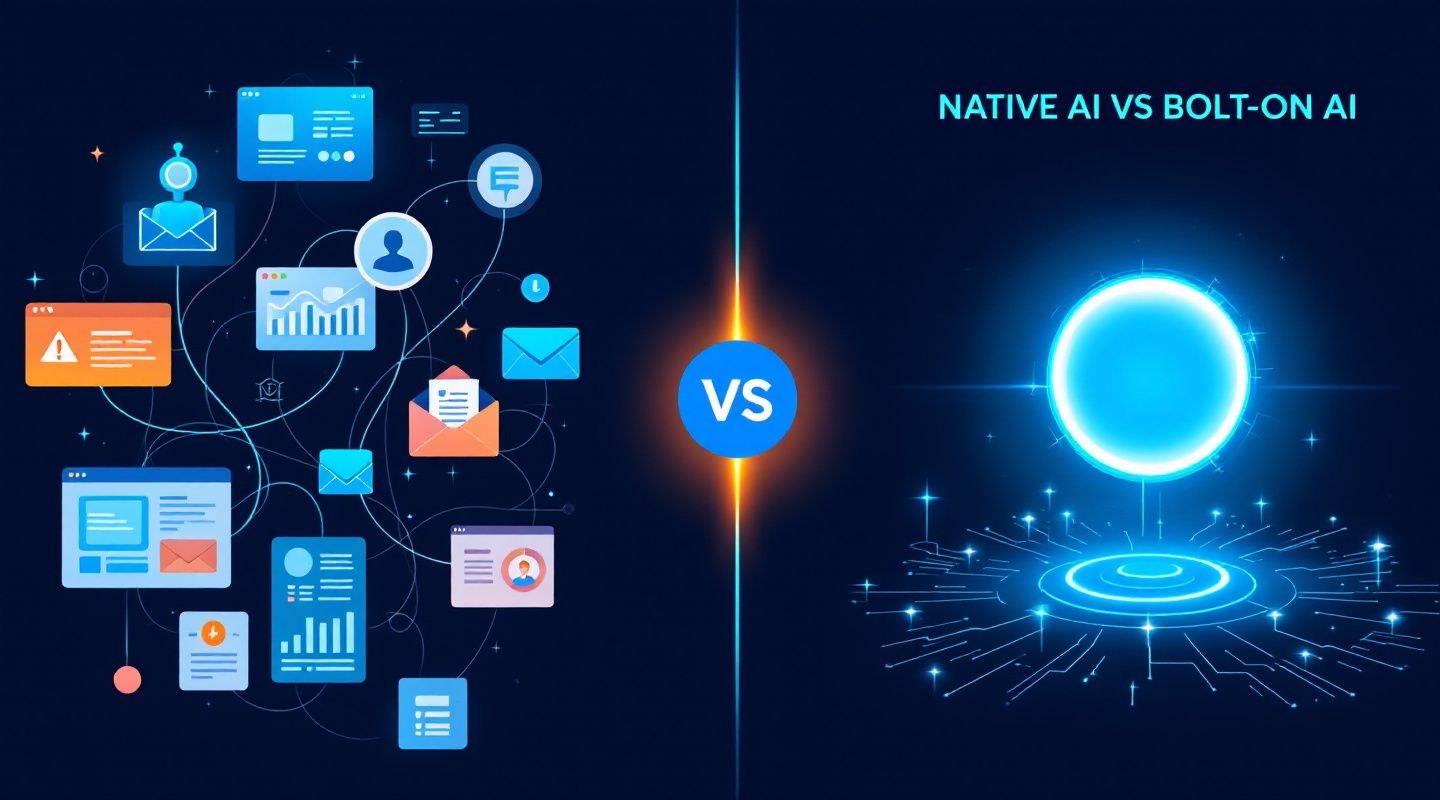
The old answer was a Frankenstein stack — a CRM for contacts, a separate tool for cold email, another for prospecting, a scheduler, a Slack bot, maybe a spreadsheet holding it all together because nothing talks to anything else. You'd spend more time context-switching between tabs than actually talking to prospects.
That's not what it looks like anymore. Here's the stack that's actually working for lean teams right now — and why most of it collapses into a single tool.
The Old Stack Was Never Built for Speed
Picture the typical early-stage sales stack circa 2022: HubSpot free tier for contacts, Apollo for prospecting, a separate cold email tool with its own deliverability settings, Calendly bolted on the side, and a ChatGPT tab open in another window for drafting copy. Five logins. Five places data can go stale. Zero shared context between them.
The real cost isn't the subscription fees — it's the switching. A founder doing their own sales loses 10-15 minutes every time they move from "who should I contact" to "what do I say" to "did they open it." Multiply that by 100 prospects and you've burned a week doing admin, not selling.
What Changed: AI Native, Not Bolted On
The shift in 2026 isn't that AI got added to sales tools — every tool claims that now. It's that AI stopped being a plugin and started being the interface. Instead of a CRM you operate, you have a CRM you talk to.
That's the model behind Anablock CRM. Ana, the AI assistant built directly into the platform, doesn't sit next to your pipeline — it is how you work the pipeline. You don't open five tabs to go from "find prospects" to "send outreach" to "book a call." You ask.
The Actual $0-to-100 Stack
Here's what a lean founder or two-person sales team needs — and nothing more:
1. One system of record.
Every contact, every deal stage, every note lives in one place. No syncing HubSpot to a spreadsheet to a Notion doc. When a lead comes in from a form, an ad click, or a referral, it's a contact the moment it happens — tagged by source, ready to work.
2. Built-in prospecting.
Finding your first 100 customers usually means finding them yourself before you can afford outbound tools. A stack that pulls from Apollo-style people/company search and Google Places-style local business discovery inside the CRM means you go from "who fits our ICP" to a saved contact list in one motion — no CSV exports, no manual re-entry.
3. AI-drafted, personalized outreach.
Generic templates don't convert at this stage — you need outreach that references the prospect's industry, role, and actual pain point. An AI assistant that already has the contact's context (company, title, source, notes) can draft that in seconds instead of you staring at a blank subject line.
4. Automatic follow-up sequences.
Most deals aren't lost on the first email — they're lost on the follow-up that never happened because the founder got busy. A 3-touch sequence (no response, interested later, need more info) that fires on schedule without you remembering to do it is the single highest-leverage automation in an early sales motion.
5. Segmentation without spreadsheets.
As soon as you pass 30-40 contacts, "who do I message next" stops being obvious. Smart Lists — saved filters by status, source, or industry — replace the spreadsheet tab you'd otherwise be maintaining by hand.
6. Native integrations, not middleware.
Your sales stack needs to live where you already work — Gmail for the actual send, Calendar for bookings, Slack for internal handoffs. The fewer places you need Zapier to duct-tape together, the fewer things break silently.
7. One place to see the whole pipeline.
Lead → Qualified → Nurturing → Opportunity → Customer. If you can't see that funnel in one view, you can't tell what's actually working. Pipeline analytics — conversion rates, stale deals, average cycle time — need to be a query away, not a monthly export-and-pivot-table exercise.
What This Replaces
If you're stacking this against 2022-era tooling, one AI-native CRM like this typically replaces:
- A standalone CRM (HubSpot/Pipedrive free tier)
- A cold email tool
- A prospecting subscription (Apollo/Hunter as separate line items)
- A follow-up/sequence tool
- The ChatGPT tab you had open for drafting copy
- The spreadsheet you were using to track "who did I email last"
That's not a minor convenience — it's the difference between spending your first quarter building a sales process and spending it actually running one.
The Real Lesson for 2026
Getting to 100 customers was never really a tooling problem — it's a focus problem. Every extra tab, every manual data entry, every "let me just update the spreadsheet" is time not spent talking to a prospect. The stack that wins in 2026 isn't the one with the most features. It's the one that gets out of your way fast enough that you spend your limited hours on the only thing that actually moves the number: conversations with people who might buy.
If you're building that stack right now, start with the CRM your AI assistant lives inside — not next to.
See what an AI-native sales stack looks like in practice: crm.anablock.com