

October 5, 2026
A practical breakdown of how to generate leads through paid advertising — offers, landing pages, conversion tracking, and the CRM follow-up system that actually turns clicks into closed deals.
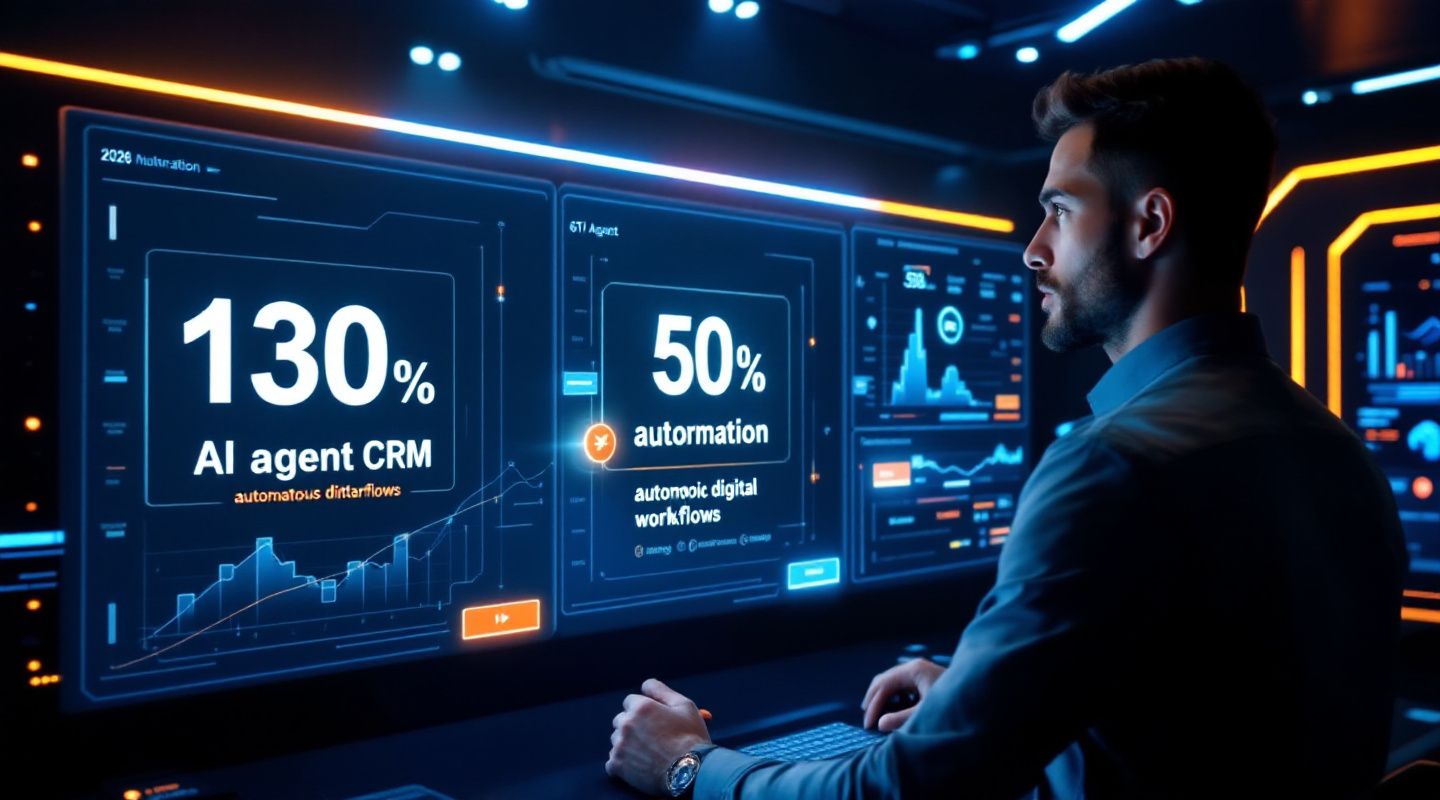
If you still think of AI agents as something the big tech companies are experimenting with in a lab, you're already behind. Not by a few months. By a meaningful, compounding margin that is getting harder to close every quarter.
This isn't a prediction piece. It's a status report. And the status is this: AI agents have crossed the line from novelty to operational infrastructure, and the businesses that haven't made that transition yet are now visibly feeling the gap.
Here's what every business owner, founder, and operations leader needs to understand about where things stand right now, and why this specific quarter matters more than the next one.
A year ago, that figure was closer to 30%. The acceleration has been sharp. What changed? The tooling matured, the cost dropped, and early adopters started publishing results that were too compelling to ignore. AI agents are no longer a pilot program. They're being embedded into sales pipelines, customer support queues, and operational workflows as standard infrastructure.
The businesses driving this shift aren't just enterprise giants with dedicated AI teams. They're 20-person agencies, regional service companies, SaaS startups, and professional services firms that simply got tired of watching leads go cold while their team slept.
Response time is one of the most consistently underestimated factors in conversion. Industry data has shown for years that responding to a lead within five minutes dramatically increases the likelihood of a sale. In 2026, the businesses winning that race aren't doing it with faster humans. They're doing it with agents that respond in seconds, around the clock, seven days a week.
This isn't about replacing your team. It's about making sure no opportunity falls through the cracks at 11 PM on a Friday or over a holiday weekend. The businesses that have deployed voice and text agents for first-response and qualification aren't just faster. They're structurally more competitive.
These aren't figures from theoretical projections. They reflect the real-world outcome of automating repetitive, high-volume tasks: lead qualification, appointment booking, follow-up sequences, FAQ handling, that used to consume hours of human time every week. When an agent handles 200 routine interactions and escalates only the five that genuinely require human judgment, your team gets to operate at a higher level. And your cost per interaction drops significantly.
Let's be direct about where the realistic capability line sits in 2026, because there's still a lot of noise in this space.
What AI agents are doing reliably and at scale today:
Where limitations still exist:
The key takeaway: the ceiling on what's achievable has risen significantly in the last 12 months. If your last evaluation of AI agents was even six months ago, the landscape has shifted enough to warrant a fresh look.
One of the main reasons businesses stall on AI adoption is that it feels abstract, a concept rather than a concrete set of tools with a deployment path.
Here's a practical example of what a modern AI agent stack looks like for a business operating in 2026.
Anablock has built an AI-first CRM designed specifically around this operational model. Their platform includes two core agents:
Ana is an AI sales and marketing co-pilot with live read/write access to your CRM. That last part matters more than it sounds. Ana doesn't just surface information. She acts on it. She can update deal stages, log interactions, trigger follow-up sequences, draft outreach, and give your team a real-time picture of where the pipeline stands. She functions as a co-pilot that removes the administrative drag from your sales process so your team can focus on closing.
Echo is the customer-facing layer, a voice and text agent that handles inbound and outbound interactions. Echo can qualify leads, answer questions, book appointments, and escalate to humans when appropriate, across both voice and text channels. She doesn't take days off or miss calls. For businesses where first-response speed and 24/7 availability are a competitive differentiator, Echo closes that gap immediately.
Together, Ana and Echo represent what a practical, deployed AI agent stack looks like: not a chatbot bolted onto a website, but integrated agents with access to your data, operating in your workflows, and moving your business forward between the hours your team is active.
Here's the uncomfortable truth: AI adoption compounds.
Businesses that deployed agents 12 months ago have had 12 months of data, iteration, and refinement. Their agents are better calibrated. Their teams have adapted. Their processes have been rebuilt around the efficiency gains. The gap between them and a business starting fresh today isn't just a 12-month head start. It's a structural advantage that grows every quarter.
This is not meant to create panic. It's meant to create urgency with a productive outlet. Q1 and Q2 of 2026 represent the last window where getting started still feels like an early-mover advantage rather than a catch-up exercise. By Q4, a significant portion of your competitive set will have operationalized AI agents in some form. The question isn't whether this technology becomes standard. It already is. The question is whether you're building the competency now or paying a premium to retrofit it later.
The businesses that will feel this most acutely are those in competitive service industries: sales organizations, agencies, real estate, financial services, home services, SaaS, where speed, follow-up consistency, and availability are direct inputs to revenue.
The right first step isn't buying software. It's understanding where your specific operation has the most to gain and where the realistic deployment path begins.
That's exactly what a strategy call is designed to surface.
Don't let another quarter pass with your competitors pulling further ahead.
Written by


If you are ready to move from research to implementation, we can help map the right AI system around your tools, data, team, and goals.