 In recent years, the landscape of professional gatherings has undergone a dramatic transformation. Virtual events have evolved from a necessity during global challenges to a preferred mode of connection for many organizations. As we look towards the future, it's clear that artificial intelligence (AI) is set to play a pivotal role in shaping the new norm for conferences. Anablock will explore the exciting trends and innovations that are defining the future of virtual events.
1. AI-Powered Personalization
One of the most significant advancements in virtual events is the integration of AI and machine learning to create personalized experiences for attendees. According to RingCentral, AI is being used to tailor content, recommendations, and networking opportunities to individual preferences. This level of customization ensures that participants get the most value out of their virtual conference experience, increasing engagement and satisfaction.
2. Enhanced Engagement Strategies
Event producers have recognized the importance of keeping attendees actively involved during virtual conferences. In 2024, we're seeing a surge in comprehensive engagement strategies that go beyond simple Q&A sessions. Kaltura reports that event planners are now prioritizing engagement as a key element in virtual events. This includes interactive polls, breakout rooms, and AI-driven networking suggestions to foster meaningful connections among participants.
3. Augmented Reality (AR) Integration
The integration of Augmented Reality is set to add a new dimension to virtual conferences. AR technology allows for more immersive presentations, interactive product demonstrations, and virtual networking spaces that mimic in-person interactions. This trend is expected to bridge the gap between physical and digital event experiences, making virtual conferences more engaging and memorable.
4. Gamification for Boosted Interaction
To combat the potential lack of interaction in virtual settings, event organizers are turning to gamification. By incorporating game-like elements such as challenges, leaderboards, and rewards, virtual conferences are becoming more dynamic and enjoyable. This approach not only increases participation but also helps in retaining information and building connections among attendees.
5. Advanced Security Measures
As virtual events become more sophisticated, so do the security risks. In 2024, it's crucial for event organizers to implement robust security measures. End-to-end encryption and multi-factor authentication are becoming standard features to protect the integrity of events and the data of participants.
6. AI-Driven Event Management
AI is not just enhancing the attendee experience; it's also revolutionizing event management. AI-powered event platforms are streamlining processes from registration to post-event analytics. These tools can handle tasks such as attendee tracking, real-time translation, and even content curation, allowing organizers to focus on strategic aspects of event planning.
7. Hybrid Event Models
While virtual events are on the rise, the future also points towards hybrid models that combine the best of both virtual and in-person experiences. This approach allows for greater flexibility and reach, catering to both remote and on-site attendees. The challenge lies in creating seamless integration between the two formats, which is where AI comes into play, ensuring smooth transitions and equal engagement opportunities for all participants.
8. Data-Driven Insights
The digital nature of virtual events provides a wealth of data that can be analyzed to improve future conferences. AI algorithms can process this information to offer insights on attendee behavior, content performance, and overall event success. Forbes reports that AI-powered event pages can boost conversion rates by up to 59%, which is 10% higher than the industry norm.
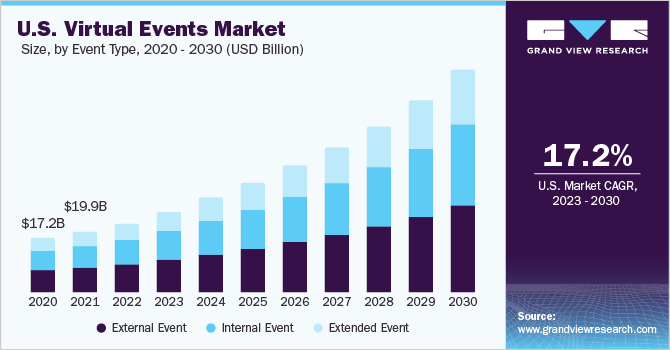
The future of virtual events is bright and rapidly evolving. With a projected compound annual growth rate (CAGR) of 17.2% for the U.S. Virtual Events Market from 2020 to 2030, it's clear that this sector is poised for significant expansion.
As AI continues to advance, we can expect even more innovative features and improvements in virtual conference experiences. From more natural language processing for better interactions to predictive analytics for personalized agendas, the possibilities are endless.