AI Chatbots vs Human Customer Service: Finding the Perfect Balance
If you have ever reached out to a company and wondered, “Am I chatting with a bot or a person right now?” you are not alone.
As businesses scale, they face a constant challenge: how to deliver fast, reliable support without losing the human connection customers still value. This has turned the discussion around AI chatbots vs human customer service into an ongoing debate.
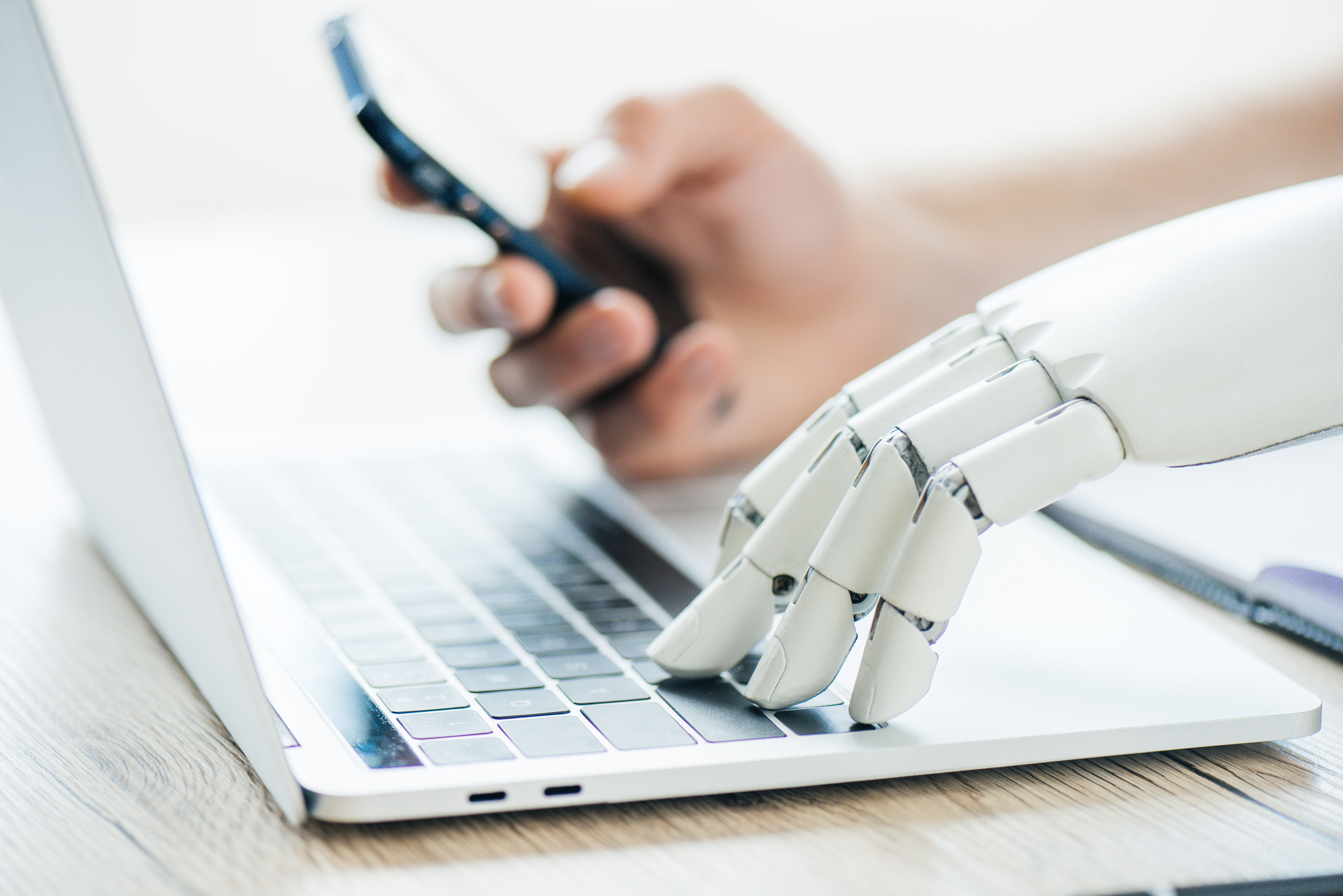
The reality is that the most successful companies are not choosing one over the other. They are building hybrid support models where AI and humans work together. When done well, this approach improves efficiency, reduces wait times, and preserves the empathy and trust that only people can provide.
At Anablock, we see modern customer support as a collaboration between automation and humans, not a competition.
AI Chatbots vs Humans: What Each Does Best
A meaningful customer service comparison starts with acknowledging that AI chatbots and human agents excel at different things.
What AI Chatbots Do Best
AI chatbots are especially effective at:
- Handling large volumes of repetitive questions
- Responding instantly at any time of day
- Providing consistent, policy-aligned answers
- Collecting basic information and routing conversations
For requests like order status, password resets, or business hours, chatbots are often faster and more efficient than human agents.
What Human Agents Do Best
Human customer service teams shine when conversations require:
- Emotional intelligence and empathy
- Understanding nuance or ambiguity
- Handling complex or sensitive situations
- Making judgment calls and exceptions
When a customer is frustrated, confused, or dealing with a high-impact issue, a trained human agent can adapt in ways automation cannot fully replicate.
The real question is not AI chatbots vs humans. It is where each belongs in the customer journey.
Why Bots-Only or Humans-Only Models Fail
Extreme approaches rarely deliver good results.
Problems With Bots-Only Support
A bots-only support model often leads to:
- Frustration when conversations fall outside predefined flows
- Dead ends with no clear path to a human
- A perception that the company is avoiding real interaction
Problems With Humans-Only Support
A humans-only model creates different challenges:
- Long wait times during busy periods or outside office hours
- High operational costs as volume grows
- Burnout among agents answering the same questions repeatedly
This is why more organizations are moving toward a hybrid support model that combines automation with human service.
The Hybrid Support Model Explained
In a hybrid support model, AI chatbots and human agents work together in a structured way.
A Typical Hybrid Flow
- A customer reaches out via chat, website, SMS, or messaging apps
- An AI chatbot responds instantly and gathers initial context
- Simple issues are resolved automatically
- Complex or sensitive cases are escalated to a human agent with full context
From the customer’s perspective, the experience feels seamless. They get quick help when possible and a real person when it matters. From the business side, support teams become more efficient and focused.
Customer Experience From the User’s Point of View
Customers want different things depending on the situation.
- Speed and convenience for simple requests
- Empathy and reassurance for complex issues
A fast chatbot response feels great when checking a delivery or booking status. But when something goes wrong, customers want to feel heard and understood.
Matching Requests to the Right Channel
- FAQs, status checks, and basic guidance → AI chatbots
- Complaints, edge cases, and emotional situations → human agents
Most customers do not care whether the responder is a bot or a person. They care about ease, speed, and clarity.
How Chatbots Make Human Agents More Effective
AI chatbots are most powerful when they support human teams rather than replace them.
Chatbots can:
- Collect details before a human joins the conversation
- Pull relevant account data or knowledge base articles
- Summarize conversation history for the agent
- Suggest replies or next steps
This reduces repetition, shortens resolution time, and allows agents to focus on solving problems instead of gathering information.
Measuring Efficiency in a Hybrid Support Model
A serious customer service comparison also looks at outcomes.
Well-designed hybrid models typically result in:
- Faster first response times
- Fewer tickets reaching human agents
- Shorter handle times for escalated cases
- Less frustration caused by repeated explanations
Automation absorbs volume. Humans deliver value. Together, they create a support system that scales without sacrificing quality.
How Anablock Designs Chatbots That Work With Humans
At Anablock, we do not start with replacing teams. We start by identifying where automation genuinely helps.
Our Approach
1. Understanding Real Conversations
We analyze incoming requests, patterns, and agent workflows.
2. Identifying High-Impact Automation
We focus on repetitive questions, data lookups, scheduling, and common workflows.
3. Designing the Hybrid Model
We define clear rules for when chatbots handle requests and when humans take over.
4. Integrating With Existing Tools
Chatbots connect to CRMs, ticketing systems, calendars, and messaging channels.
5. Launching and Refining
We track performance and continuously improve based on real usage data.
The result is a balanced support model where AI reduces friction and humans deliver empathy.
Finding the Right Balance for Your Business
There is no universal formula for the perfect mix of AI chatbots vs human customer service. A SaaS company, a healthcare provider, and an e-commerce brand will each need a different balance.
What matters is the principle:
- Use automation to remove repetitive work and delays
- Use human support where empathy, judgment, and flexibility matter
If your customers are waiting too long or your team is overwhelmed with repetitive requests, it may be time to rethink how AI and humans share the workload.